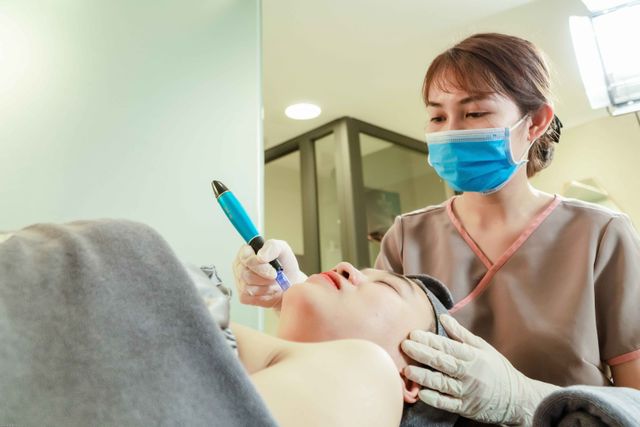
Also known as solar lentigines, age spots form after years of cumulative UV exposure and are found primarily on the face, hands, shoulders, and forearms. Given the high levels of UV radiation in Australia, where UV levels rank among the highest in the world, pigmentation concerns are a common aspect of dermatological practice. Laser treatment is far and away the best clinically supported option, outperforming the traditional alternatives by a significant margin, as evidenced by the published evidence. When patients are researching options based on resources like thesccc.com.au, it is most helpful to know what the evidence actually shows rather than what promotional materials suggest.
Why Does Laser Outperform the Alternatives?
Laser technology directs focused light energy into the pigmented lesions, where melanin absorbs the energy and breaks down into smaller particles that are cleared by the immune system, sparing the surrounding skin. A 2019 systematic review of 41 clinical trials with 3,234 patients found laser-based treatments outperformed traditional approaches, with chemical peels achieving improvement rates of only 12% to 46%, and cryotherapy producing success rates between 37% and 71.4%.
These comparison numbers are important because most patients present with prior failed attempts at topical treatments or peels. This explains the difference. Surface agents act slowly, diminishing melanin over time. Laser energy is directed to the pigment itself, fragmenting it at the source, and stimulating the body to do the clearance work that no surface treatments can reproduce. This drives the difference in outcome, and why laser is more and more the first line of treatment, rather than the last when topical or peels have failed.
What Do the Success Rates Actually Mean for Patients?
Clinical evidence is very strong, with success rates for picosecond lasers (the current state-of-the-art) ranging from 67.9% to 93.0% across the evidence base, IPL (technically not lasers but still widely used in Australian cosmetic dermatology clinics) showing effectiveness rates from 74.6% to 90%, and Q-switched lasers delivering improvement in the range of 36.4% to 76.6%. Those ranges are wide, and that width is significant. It indicates how much patient factors come into play, even when technology is standard.
The distinction that patients should understand before agreeing to treatment is the difference between improvement and eradication. Clearance rates of over 90% have been demonstrated for certain lesion types and patient groups using high-performing picosecond systems. For most patients, significant fading over one to three sessions is more realistic, and elimination after one is not. Treated spots usually darken immediately after the procedure and flake off over one to three weeks as the fragmented pigment is sloughed. This is a normal process that often surprises patients who are not informed of this expectation.
The Technology Choice Shapes the Outcome More Than Most People Realise
Not all laser systems perform equally on age spots, and the difference between categories is significant. Fractional CO2 lasers, which have high success rates for wrinkles and skin texture, have success rates of only 8% to 23% for isolated solar lentigines. This is a very different performance profile from what that system delivers for other indications. One of the main reasons patients end up unsatisfied with their results is that they are choosing a treatment based on what a clinic happens to offer rather than what the evidence shows works best for the particular condition that the patient is trying to treat.
Risks and Costs Worth Knowing Before the First Session
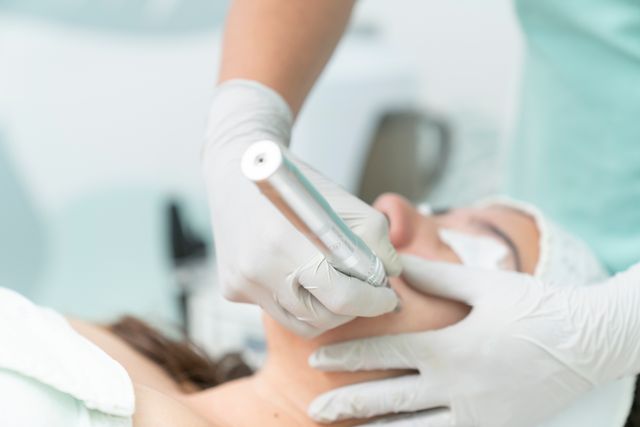
The most commonly experienced side effects of laser pigmentation treatment are transient (redness, swelling, mild pain, crusting that resolves within days to weeks). The most important adverse effect is post-inflammatory hyperpigmentation (especially in patients with darker skin types), which is reported to be lower with IPL and pulsed dye laser than with several other systems. This highlights the importance of technology selection when skin phototype is a consideration.
The factor that most determines whether results last is not cost but technology. Solar lentigines are primarily caused by UV exposure, and while clearing lesions can be achieved, the continued development of new lesions will occur if sun protection is not consistent after treatment. This makes daily broad-spectrum sunscreen with SPF 30 or greater, protective clothing, and avoiding peak UV times non-negotiable components of the long-term outcome. It is a conversation that must be had and repeated in two years.