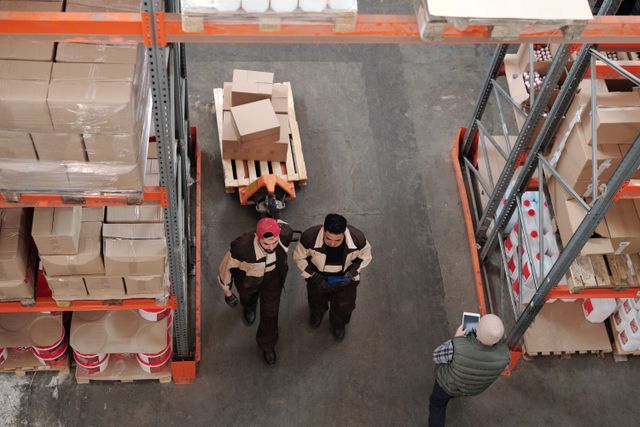
The pallet itself is quite a basic item – wooden or plywood construction, four-way entry capability, basic dimensional specifications that ensure compatibility with a vast majority of transport modes and warehousing equipment. Simplicity does not always mean straightforwardness though, as the decisions made with regard to loading, consolidation, handling and transporting pallets on Australian transport routes become rather complex, defining whether the goods shipped on the pallet will be delivered as ordered or become the reason for claims procedures.
According to Transport.gov.au data, the road freight task in Australia amounted to some 253 billion tonne-kilometres in 2024–25, the road and rail transport combined providing for the lion’s share of domestic freight carriage. A large percentage of these goods would be shipped on pallets – for retail replenishment, FMCG delivery, pharmaceutical logistics and manufacture output deliveries. It sounds like quite a lot.
Where the Risk Actually Lives in a Pallet Shipment?
Pallet freight damage during transport does not occur during the journey itself but at the handling points along the way. Each transfer of a pallet from one vehicle to another presents a chance for mishandling, forklift impact or unbalance of the load. A pallet shipped out of a Melbourne warehouse carefully wrapped and arranged can be found to have arrived at a Sydney depot in a different state after three handling points.
Point-to-point shipment reduces that hazard significantly. The cargo is handled only at the loading and offloading point and not at any other points, so its condition is improved. But the sacrifice is in terms of the cost because point-to-point is not always the most economical choice in high-volume routes. Such is the benefit of a provider who knows when cross-docking adds value to the process and when it doesn’t.
What Makes a Professional Pallet Handler?
Pallet transport Australia isn’t just one run-of-the-mill service, there’s a big difference between a genuine expert and someone who treats pallets as just another piece of freight. The difference shows up in damage rates, how well the delivery is handled and how many claims you have to deal with each quarter. Professional pallet handling is all about knowing how to stack the load, how to wrap and brake the pallet right, and which trucks are best for the job, all based on what’s being transported.
Same-day pickup is particularly important for industries with super tight deadlines. FMCG distributors and pharmaceutical suppliers can’t afford to have their carrier miss a cut-off; it’s just not an option. A provider with good local connections can pick up the slack and still get the goods to where they need to be, even if the bookers can’t.
What Professional Pallet Handling Changes?
Pallet transport in Australia is not a one-size-fits-all solution. The difference between a provider with actual pallet handling expertise and one that treats pallets like generic freight units shows up in damage rates, delivery compliance and the number of claims conversations a business has to have each quarter. A provider that can do pallet transport right involves load configuration knowledge, the right wrapping and bracing protocols, vehicle selection appropriate to the goods and forklift operation standards that take into account fragile or high-value stock.
Same-day pickup capability is especially relevant for industries with time-sensitive goods. FMCG distributors and pharmaceutical suppliers can’t afford a same-day cut-off that the carrier misses. A provider with access to local carrier networks can absorb last-minute volume and still meet the pickup commitments that booking platform operators can’t.
Regional Australia and the Pallet Delivery Gap
Major freight routes connecting capital cities get the bulk of the carrier capacity available. Regional and rural Australia gets much less. The gap between national carriers’ claims about capacity and their actual deliveries of freight into remote regions can be quite large. Regions like Weipa, Eden, Kalgoorlie and all the Pilbara region need carrier partnerships that go beyond the normal metro area network.
For a business that sources or distributes through regional Australia, a freight partner that truly has coverage into the regions is needed. A booking company that can book the freight and pass it on to whoever will carry it is not the same thing and the difference is critical if the consignment is urgent or valuable.

The Business Case for Delivering Pallet Transport Effectively
Redelivery costs, customer credit disputes and the cost to reputation of missing delivery times are not normally compared with freight costs. It’s a mistake not to do so. A pallet freight company which offers route information, dedicated carrier partnerships and professional handling processes for more may actually cost less than an inexpensive freighter who fails regularly.
The businesses that pay the least in freight costs overall aren’t usually the ones that pay the least per consignment. They’re the businesses that’ve picked pallet transport in Australia freight companies whose service standards keep their costs downstream at nearly zero.